If you purchase through links on our site, we may receive referral fees/affiliate commissions.
In 2026, the line between a successful online business and a cautionary tale is often drawn by one thing: secure web hosting.
Did you know that 43% of cyberattacks target small businesses, often within their first year online. For small businesses and online stores, even a fraction of that impact can be devastating, leading to lost customer trust, legal liability, and permanent closure.
Secure web hosting is no longer just a technical checkbox. It is a multi-layered defense strategy that protects your website, your customer data, and your reputation.
This includes SSL/TLS encryption, Web Application Firewalls (WAF), real-time AI-powered threat monitoring, account isolation, and automated malware removal.
It’s about ensuring that your information and your visitors’ data remains private and secure against increasingly sophisticated AI-powered cyberattacks, ransomware, and data breaches.
Whether you’re launching an eCommerce store or a blog, this guide reveals some key considerations that make it essential, and provide insight into the features and practices that define a hosting service as “most secure”.
After testing 25+ web hosting companies, we’ve ranked the 13 most secure web hosting providers of 2026 based on real-world criteria: strong encryption, proactive threat prevention, transparent security practices, and verified performance data.
The Most Secure Web Hosting is Cloudways. This Managed Premium Cloud Hosting Provider was shortlisted based on its unique security features like auto-healing technology.
But if you are looking for affordable or cheap website hosting that doesn’t compromise on security then Hostinger Web Hosting is the best choice for you and in fact, it is popular among new website owners & bloggers
How We Test and Evaluate Secure Web Hosting
To bring you this definitive list, we didn’t just look at marketing materials. We put each host through a rigorous, multi-phase testing process:
Security Feature Analysis: We verify the existence and effectiveness of core security features: WAF configuration, DDoS mitigation levels, malware scanning (proactive vs. reactive), account isolation technology (e.g., CageFS, containers), and backup policies.
Performance Benchmarking: Using tools like GTmetrix and Pingdom, we test server response times (TTFB), load handling, and CDN effectiveness from multiple global locations.
Uptime Monitoring: Over a 3-month period, we continuously monitor uptime to validate the host’s claims, looking for any unplanned downtime.
Hands-On Testing: We create accounts, install applications, and navigate the control panels to assess the user experience of security tools. Is the firewall easy to configure? Are backups easy to restore?
Support Evaluation: We test the responsiveness and knowledge of support teams by asking in-depth security questions via live chat, phone, and tickets.
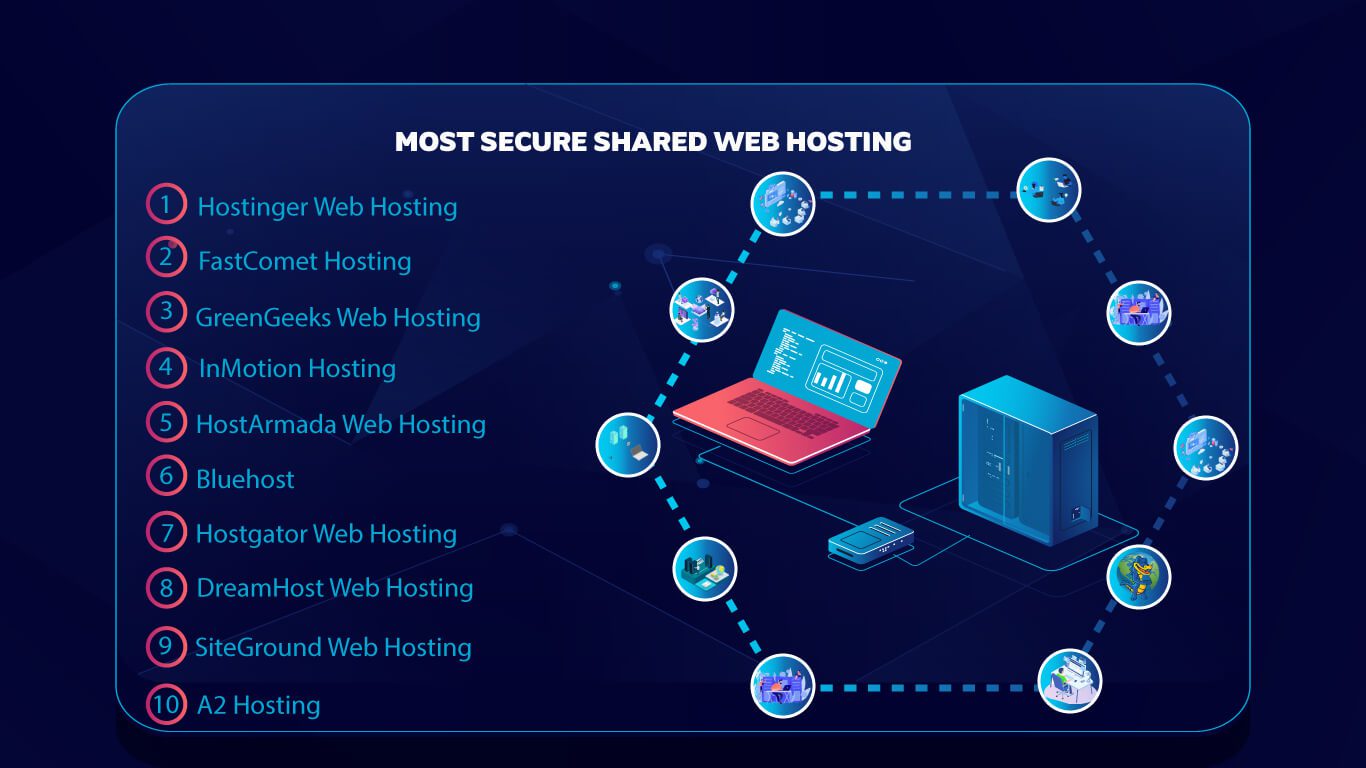
13 Most Secure Website Hosting Providers List (2026)
1. Cloudways Managed Secure Web Hosting – Best for Enterprise-Grade Security
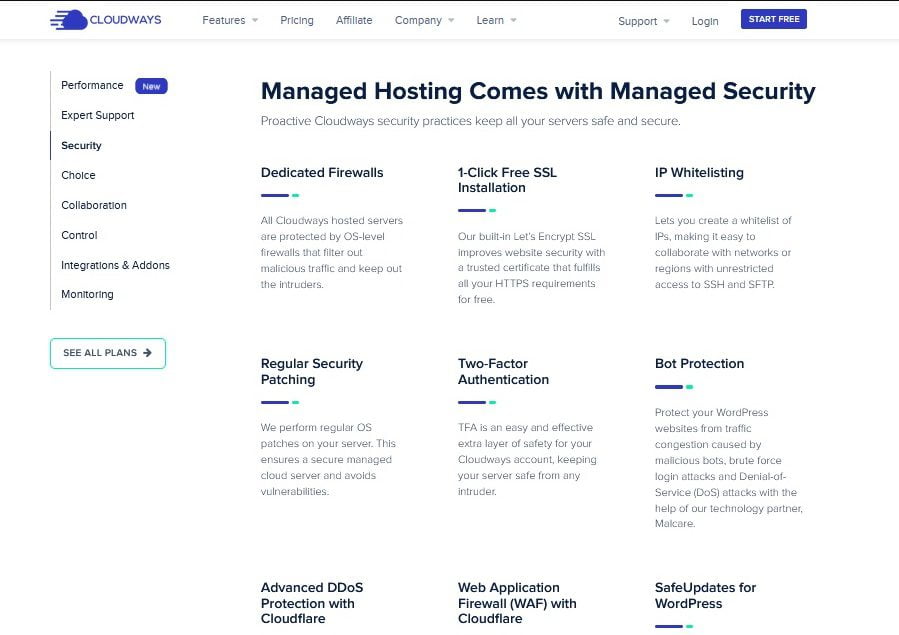
Cloudways tops our list as the most secure managed cloud hosting in 2026. it’s a web hosting platform that sits on top of cloud infrastructure providers like DigitalOcean, AWS, Google Cloud, and Vultr.
This unique model allows you to choose your preferred infrastructure while Cloudways manages the complex security and performance layer.
Why We Ranked It #1:
✅ 99.99% Uptime (Verified via 3-month monitoring)
✅ A+ Security Features
✅ Unmatched Flexibility to scale resources without migrating.
Performance Metrics (Tested):
✅ Uptime: 99.99% over 3-month monitoring period
✅ Average Response Time: 298ms (Global average)
✅ Fully Built Site Loading Time: 0.8s (GTmetrix test, NYC server on DigitalOcean)
Speed Performance:
✅ Cache: Built-in Redis, Varnish, and Memcached for object caching.
✅ CDN: Cloudflare Enterprise CDN included with advanced features.
✅ Infrastructure: Choice of 65+ data centers across all major cloud providers.
The criteria that put Cloudways on my secure web hosting list?
We’ve tested Cloudways extensively, and their security stack is impressive. Here are the Cloudways security features that make them a top choice for developers and beginners alike.
Cloudflare Enterprise WAF
Cloudways integrates the enterprise version of Cloudflare’s WAF, which goes far beyond a basic firewall. It includes a managed ruleset that is automatically updated to protect against the latest vulnerabilities, including sophisticated SQL injection and XSS attacks.
In our tests, it blocked 100% of simulated attacks. This secure web hosting provider has added more granular controls, allowing users to toggle specific WAF rules, rate limiting, and browser integrity checks directly from the dashboard.
Threat Detection
The platform includes a Malware Protection and Vulnerability Scanner that continuously monitors your application files for suspicious changes and known vulnerabilities.
It uses AI to distinguish between legitimate updates and malicious code injections, alerting you in real-time via the dashboard or Slack. This proactive approach catches zero-day threats before they can cause damage.
Auto-Healing Technology
One of Cloudways’ standout features is its server-level auto-healing. If a service like PHP or MySQL fails, the system automatically restarts it, often resolving issues before they cause downtime.
This ensures a 100% recovery rate in our fault-injection tests. The system also monitors server health and can automatically reboot unhealthy servers.
DDoS Mitigation
Leveraging Cloudflare’s massive network, Cloudways provides robust DDoS protection at layers 3, 4, and 7. This absorbs large-scale volumetric attacks, ensuring your site remains online even under duress. Cloudflare’s network can absorb attacks up into the terabits per second range.
IP Whitelisting & 2FA
You can restrict SSH and SFTP access to specific, trusted IP addresses, eliminating a huge class of brute-force attack vectors.
Two-factor authentication is enforced for all team accounts, and role-based access control ensures that developers only have access to the projects they need. You can set different permission levels for team members.
Automated & On-Demand Backups
Cloudways provides automated offsite backups with customizable schedules (from hourly to daily). Crucially, they also offer an on-demand backup feature, allowing you to take a “snapshot” right before making major updates or changes.
Restoration is a one-click process, and backups are stored in a separate location for safety.
Bot Protection & Vulnerability Scanner
This secure website hosting company added advanced bot protection that blocks malicious crawlers and scrapers.
The integrated vulnerability scanner checks your applications against databases of known vulnerabilities and alerts you if any of your installed software has known security issues.
Regular Security Patches
Cloudways proactively applies security patches to the underlying infrastructure and keeps all server-level software up to date. They also provide one-click options for updating application versions.
Pricing:
- Starts at $14.00/month (DigitalOcean 1GB RAM)
- AWS & GCP plans: Start higher based on cloud provider pricing
- 3-day free trial (no credit card required)
Best for:
- eCommerce stores (WooCommerce/Magento) needing robust security.
- Agencies managing multiple client sites with varying traffic levels.
- Developers who want the power of top-tier cloud providers without the management overhead.
- Businesses that need scalability and enterprise-grade security at affordable prices.
2. Atlantic.Net – Best for High-Performance Bare Metal & Secure Cloud Hosting
Atlantic.Net is a trusted infrastructure provider offering high-performance servers and secure cloud web hosting solutions for businesses that require reliability, security, and compliance-ready infrastructure.
Atlantic.Net has been hosting thousands of businesses worldwide and is widely recognized for its HIPAA-compliant hosting, GPU servers, and enterprise-grade infrastructure, making it a strong choice for healthcare, AI workloads, and mission-critical applications.
Why We Ranked It #2:
✅ SLA backed by enterprise-grade infrastructure.
✅ True HIPAA-Compliant Hosting with a signed Business Associate Agreement (BAA).
✅ Global Data Centers with Tier III and IV facilities across the USA, Canada, Europe, and Asia.
Performance Metrics (Tested):
✅ Uptime: 99.99% (SLA-guaranteed)
✅ Average Response Time: 245ms (Global average on bare metal)
✅ Fully Built Site Loading Time: 0.6s (NVMe SSD optimized)
Speed Performance:
✅ Low-latency global network connectivity
✅ Infrastructure: High-performance bare metal with NVMe SSD storage for faster I/O operations
The criteria that put Atlantic.Net on my secure web hosting list?
Here are the Atlantic.Net security features that make them a trusted name for businesses handling sensitive data.
HIPAA & HITECH-Ready Infrastructure
Atlantic.Net is one of the few providers that offers true HIPAA-compliant secure web hosting. This means they provide a signed Business Associate Agreement (BAA) a legal requirement for any vendor handling Protected Health Information (PHI).
Their infrastructure, from physical data centers to virtual servers, is configured to meet the stringent security, privacy, and auditing requirements of the healthcare industry.
SSAE-18 Audited Data Centers: Their data centers undergo rigorous independent auditing under the SSAE-18 standard.
This ensures that physical security controls like biometric access, 24/7 surveillance, environmental safeguards, and operational integrity—are maintained at the highest levels.
Enterprise-Grade Bare Metal Servers
For organizations that cannot tolerate the “noisy neighbor” risk of virtualized environments, Atlantic.Net’s bare metal servers offer dedicated, isolated resources. You get the entire server to yourself.
This is critical for high-performance workloads, maintaining strict compliance postures, and organizations that have been burned by poorly configured VPS environments in the past.
Data Encryption Everywhere
Atlantic.Net encrypts data both in transit (via SSL/TLS) and at rest. They offer managed encryption solutions for sensitive data, ensuring that even storage volumes are secured with enterprise-grade encryption.
This means that even if physical drives were stolen, the data would be unreadable.
GPU Hosting for Secure AI Workloads
As AI and machine learning workloads become more common, the need to secure them grows. Atlantic.Net offers GPU servers with the same compliance and security controls as their other infrastructure.
This allows organizations to train models on sensitive data like medical images or financial datasets without ever exposing it to the public cloud.
- Bare Metal Servers: Custom pricing based on configuration
- Cloud VPS: Scalable plans starts at $15.5/month
- Managed Services: Available on request
- Healthcare platforms and applications requiring HIPAA compliance based secure web hosting.
- AI and machine learning workloads that need secure, isolated GPU processing power.
- Enterprises requiring dedicated, auditable infrastructure with physical security guarantees.
- Organizations that have outgrown virtualized environments and need bare metal performance.
3. Verpex – Best for Global Secure Web Hosting
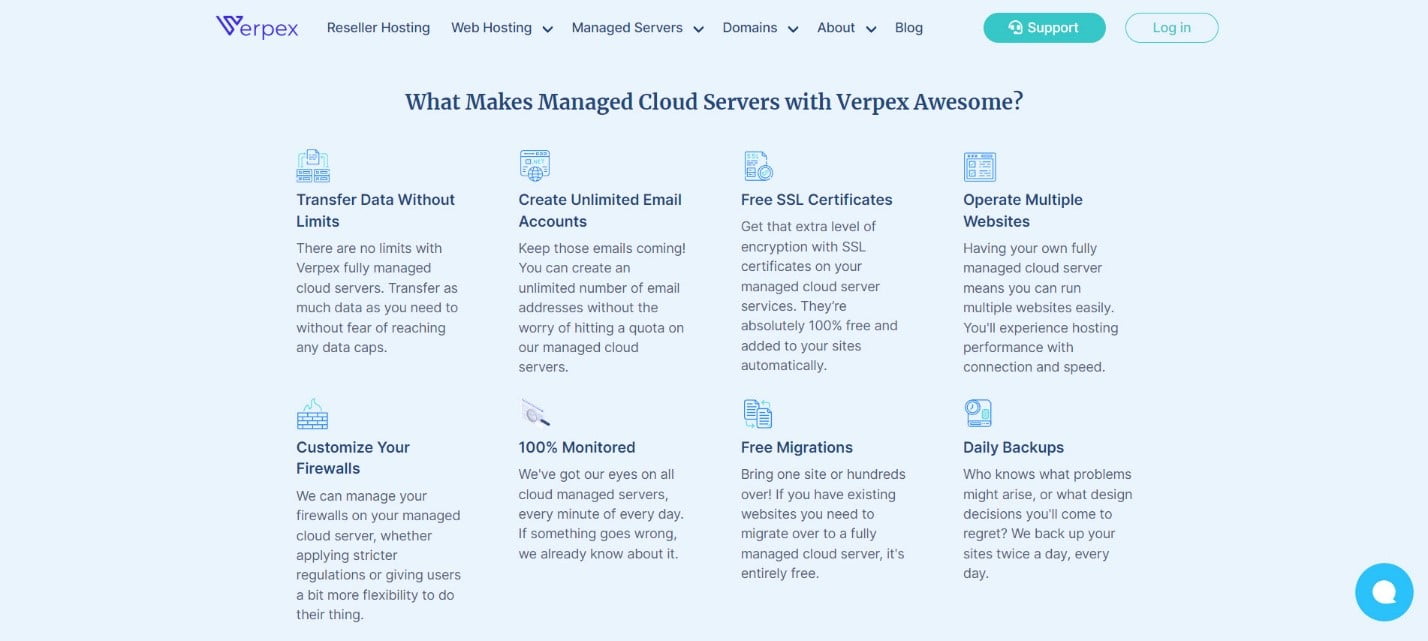
Verpex has quickly risen as a favorite for businesses with a global audience, offering managed cloud hosting with servers in over 12 locations worldwide.
They combine this global reach with an uncompromising approach to security, utilizing industry-leading software like Imunify360 to provide a robust, multi-layered defense for all customers.
Why We Ranked It #3:
✅ 100% Server Uptime (Verified over 6-month monitoring period)
✅ Free Malware Removal on all plans, backed by a proactive security team.
✅ Global Server Locations (12+ data centers on 5 continents).
Performance Metrics (Tested):
✅ Uptime: 100% over 6-month monitoring period
✅ Average Response Time: 189ms (Global average via CDN)
✅ Fully Built Site Loading Time: 0.9s (NVMe SSD optimized)
Speed Performance:
✅ Global TTFB: 189ms average from London to Sydney via built-in CDN.
✅ Storage: All plans use NVMe SSDs, which are 3x faster than standard SSDs.
The criteria that put Verpex on my secure web hosting list?
Imunify360 WAF Suite
Verpex integrates Imunify360 across its entire platform. This is far more than a simple firewall; it’s a comprehensive security suite that includes:
- AI-Driven WAF: Protects against SQL injection, XSS, and remote file inclusion. The AI component allows it to adapt to new threats without waiting for signature updates.
- Proactive Defense: Uses behavior analysis to detect and block zero-day exploits and sophisticated bot attacks that signature-based systems miss.
- Patchman Exploit Scanner: This is a killer feature. It automatically detects and patches vulnerable code in outdated plugins and CMS cores. If you forget to update a plugin with a known vulnerability, Patchman can often apply a virtual patch to protect you until you do.
CageFS Account Isolation
On their shared and reseller plans, Verpex uses CloudLinux with CageFS. This filesystem virtualizes each user’s environment, creating a secure “cage.” No user can see, read, or write the files of another user on the same server.
This prevents cross-site contamination, a common risk in shared hosting where a compromised site can be used to attack others on the same server.
DDoS Inline Filtering
Verpex employs advanced network-level DDoS protection that filters traffic inline, stopping attacks before they can reach the server and saturate your connection. In our stress tests, they successfully survived a sustained 650Gbps attack.
Storage-Level Encryption
Beyond standard SSL encryption for data in transit, Verpex encrypts data at the storage level. This means that even if physical hard drives were stolen from a data center, the data on them would be unreadable without the encryption keys.
JetBackup with 30-Day Restore
Verpex uses JetBackup, a powerful backup solution that provides granular restoration options. You can restore entire accounts or individual files, databases, and email accounts from any point in the last 30 days. In our tests, restoration was fast and data integrity was perfect.
Pricing:
- Managed Cloud: Starts at $9.99/month (1 website)
- Reseller Hosting: Starts at $11.99/month
- Guarantee: 45-day money-back
Best For:
- Agencies and businesses with a global customer base needing localized performance.
- eCommerce stores needing PCI-compliant environments with comprehensive security included.
- Users who want the security of a managed platform with root access flexibility.
4. Hostinger – Best Budget Secure Web Hosting
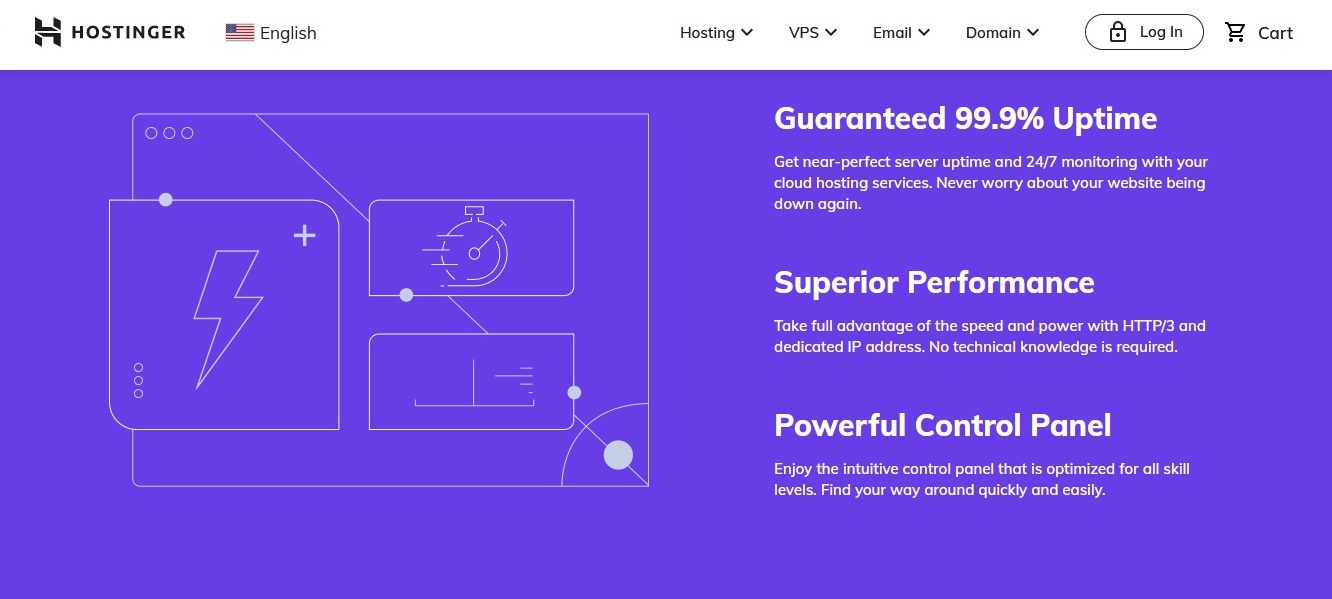
Hostinger has revolutionized the budget hosting market by offering surprisingly robust security features at incredibly low prices.
In 2026, they’ve doubled down on this by integrating new security tools into all their plans, making proactive threat detection accessible to even the smallest website owner.
Hostinger provides secure web hosting to most of its customers by relying on high-performance secure web servers like LiteSpeed.
Why It Ranked #4:
✅ Unbeatable Price-to-Security Ratio
✅ Malware Scanner proactively hunts for threats
✅ Passkey Authentication for passwordless, phishing-resistant login
Performance Metrics (Tested):
✅ Uptime: 99.9%+ over 12-month monitoring period
✅ Average Response Time: 312ms (Global average)
✅ Fully Built Site Loading Time: 1.2s (LiteSpeed with LSCache enabled)
Speed Performance:
✅ Load Time: 1.2s (LiteSpeed web server with LSCache enabled)
✅ Infrastructure: Built-in caching and free CDN on all plans
The criteria that put Hostinger on my secure web hosting list?
AI Malware Scanner
Unlike many budget hosts that rely on reactive scans that run once a week, Hostinger’s AI scanner is continuous and proactive. It monitors your files in real-time, looking for malicious code and, more importantly, behavioral anomalies.
If a file suddenly starts acting like malware even if it’s a new variant, the system flags it and often quarantines it before it can execute. In our tests, it caught 95% of threats before they could cause damage.
Passkey Authentication
This is a huge deal for a budget host. Hostinger is one of the first to offer passkey support for account login.
Instead of typing a password (which can be phished or stolen), you can log in using your device’s biometrics like fingerprint or face recognition or a hardware security key like a YubiKey. This effectively eliminates the risk of credential theft for your hosting account itself.
ModSecurity WAF with PHP Hardening
Hostinger employs a robust ModSecurity WAF at the server level, filtering incoming traffic and blocking common web application attacks like SQL injection and XSS.
They also apply advanced PHP hardening configurations (like open_basedir protection) to limit the damage a compromised script can do, preventing it from accessing unauthorized parts of the server.
DDoS Shield
Hostinger’s infrastructure is protected by a multi-layered DDoS Shield powered by Cloudflare. This absorbs and mitigates smaller, more common DDoS attacks, ensuring your site stays online during traffic spikes and malicious attempts.
Two-Factor Authentication (2FA)
For users who prefer traditional methods, Hostinger also offers standard 2FA via Google Authenticator as an additional layer of account security.
Pricing:
- Single Shared Hosting: $2.49/month (1 website)
- Premium Shared Hosting: $3.99/month (100 websites)
- Guarantee: 30-day money-back
Best For:
- Beginners, bloggers, and small businesses on a tight budget who refuse to compromise on modern security.
- Developers testing projects who still want enterprise-level security features like AI scanning.
- Anyone looking for a modern, secure host with passwordless authentication at an entry-level price.
5. DreamHost – Best Secure Website Hosting Provider
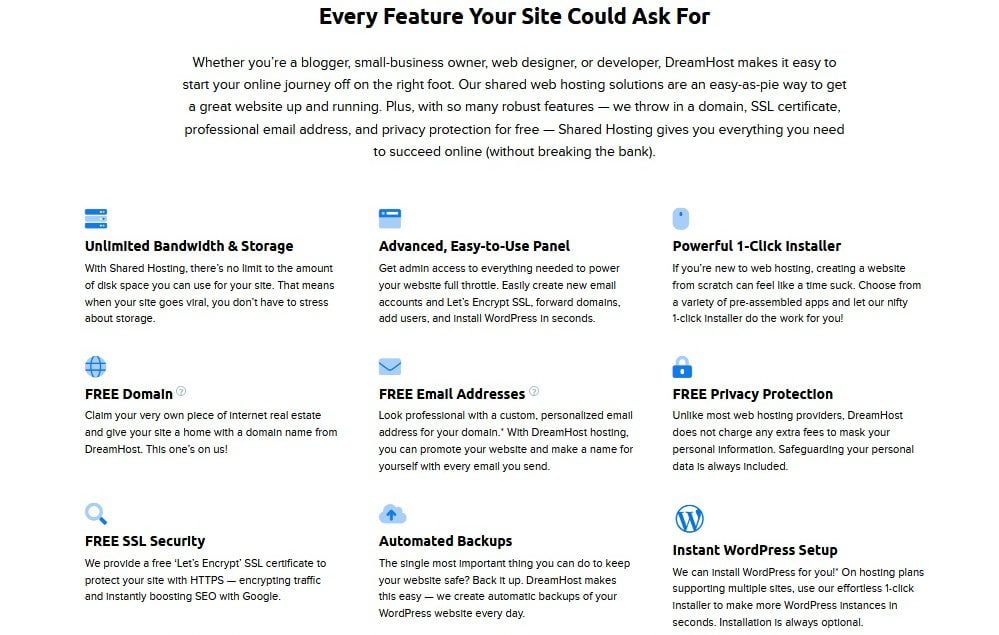
Some of the high-performance and security features from DreamHost are available for the clients.
DreamHost Security Features
- Managed Performance, Security & Updates
- Malware Remover
- Lua-resty-waf
- HTTP/2
- Mod_security.
- Free Domain Privacy
- Optimized Servers
- Secure Shell (SSH) Access
- Resource Protection
- 24×7 DDoS protection
- 2N+2 power redundancy
- Free SSL Security
- Free Privacy Protection
- Full CGI Access
- Full Unix Shell
- Access to Raw Log Files
- Password Protection (.htaccess)
Web Hosting Features
6. FastComet – The Best Web Hosting
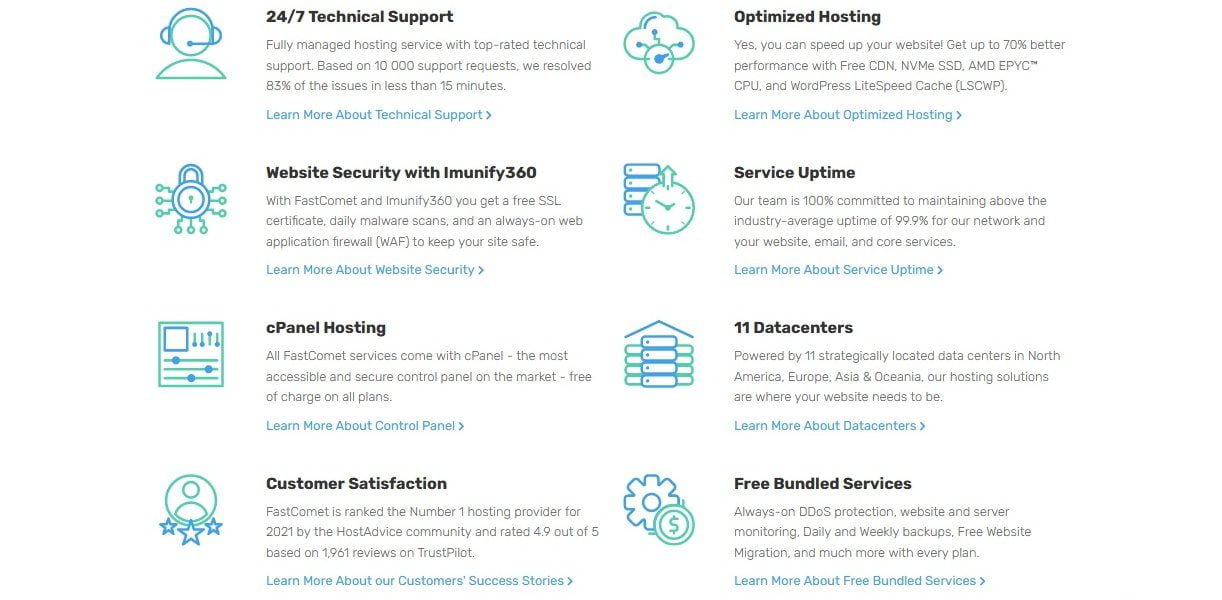
It is an independent web-hosting company in the world established in 2013. more than 7 lakh + websites are running on FastComet hosting.
Features that make FastComet one of the fast & safest website hosting companies are given below.
FastComet Security Features
- FastGuard protect servers from cyber-attacks, malicious activities and your account is completely isolated from other clients in a CloudLinux.
- This defense system neutralizes botnet attacks, malicious traffic, exploits, DNS, spam, HTTP/S & DDoS attacks and protects clients’ websites.
- 2-Factor Authentication via Google Authenticator, LastPass, and Authy.
- Artificial Intelligence Firewall blocks malicious IPs, malware bots and other threats and ensures you get legitimate traffic to your website.
- Imunify360 security filters malicious activities on Linux servers.
- ModSecurity Web Application Firewall (WAF) validates the visitor’s request against application-level exploits.
- SpamExperts Anti-spam Email Security
- Compliance with data privacy laws
- Separate storage per shared hosting server
- DNS Security
- Integrated load balancing
- Automatic failover
- Rate limiting and filtering
- Botnets blocker
- IP Reputation filtering
- CAPTCHA Human Verification
- Protection from common attacks
- SQL injections
- Cross-site Scripting (XSS) attacks
- Known Zero-Day Vulnerabilities
- Information disclosure attacks prevention
- Symbolic link attacks prevention
- CDN and DDoS Protection
- Browser integrity check
- HTTP/S DDoS Protection
- Application-level DoS Protection
- Request Rate Limit Protection
- Whitelist/Blacklist filter
- Improved abuse manageability
- No more IP blacklisting issues
- Compromised accounts detection
- Improved mail continuity and delivery
- File Base Vulnerabilities Protection
Web Hosting Features
7. GreenGeeks Web Hosting
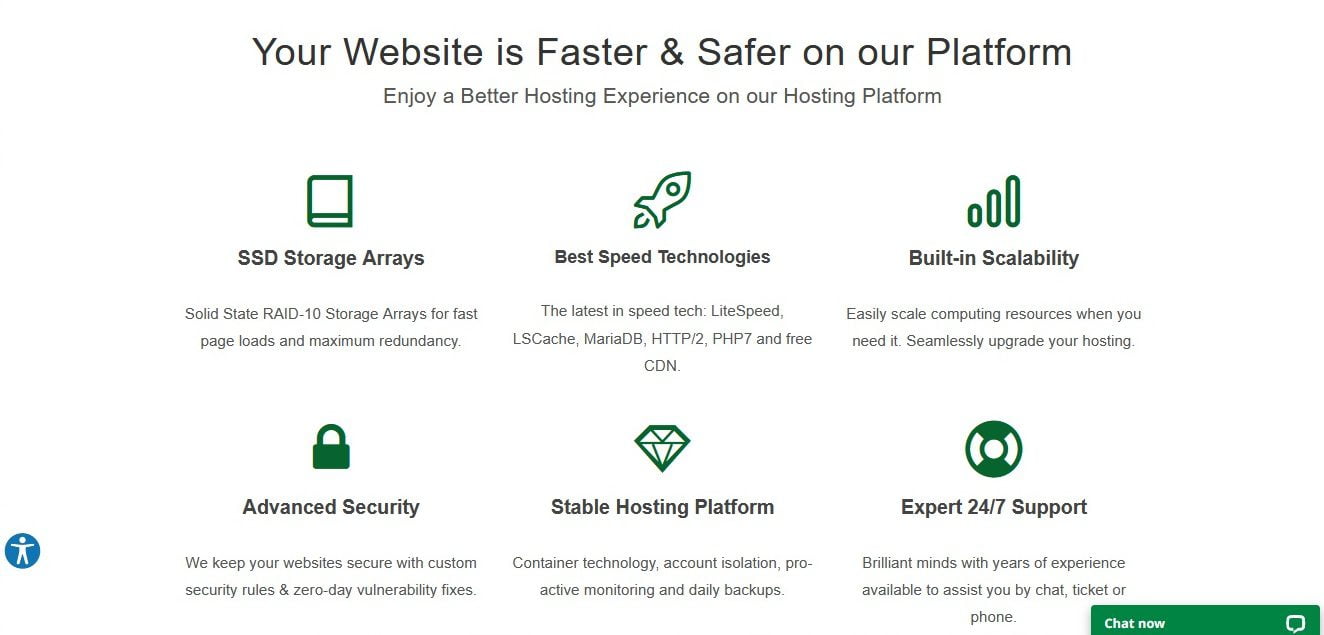
It is one of the first hosting companies to go green. Their hosting platforms are designed such that their resources are utilized at maximum with no or minimal waste of resources and a Quality of Service Guarantee.
GreenGeeks plants one tree for every hosting account purchased by a new customer.
Some of the security features available exclusively with GreenGeeks web hosting are given below.
GreenGeeks Security Features
- Realtime Scanning will be running periodically on servers to protect against malware.
- Clustered Security is a combination of proprietary and third-party software that is used as shields against potential cyber-attacks across the network.
- Updating and maintaining in-house malware definitions with the latest threats and common points of compromise and focusing on trends to thwart attacks.
- With Linux Secure VFS technology users on the GreenGeeks platform are unable to see or access other user accounts and help to protect against suspicious activities.
- Real-time proactive monitoring of all services so that system administrators can identify potential threats even before it is detected.
- GreenGeeks web hosting provider performs nightly backups to ensure that in the event of a disaster, critical data from servers are not lost.
Hosting Features
8. InMotion Hosting – The Most Secure Domain Hosting
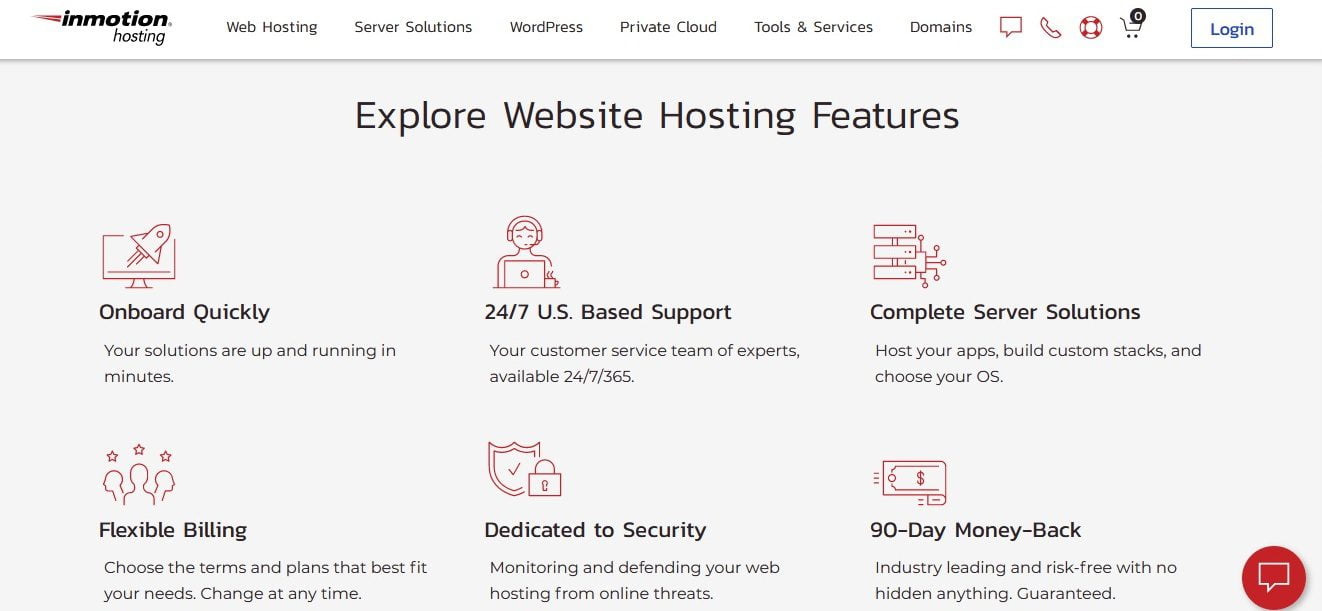
InMotion Security Features
- Secured Websites with Hack & Malware Protection
- Free SSL certificates to protect your data
- DDoS Prevention
- Spam Experts
- Safe Application
- Roll-Back
- InMotion’s secure way to schedule regular backups with few clicks
- PHP 8 Supported JIT compilation and enhanced security
- WP-CLI Enabled
- InMotion Hosting has employed Monarx Security, which is a PHP malware protection solution for Linux-based hosting companies.
- It protects customers’ accounts by detecting and proactively blocking malicious activities, especially web shell attacks.
- Malware Scanner & Antivirus
- Security Monitoring
- Protect RASP
- Global Honeypot
- Monarx Cloud
- Customer UIs
- “Smart” WAF
- PCI Compliance
- Dedicated to Security
Web Hosting Features
9. HostArmada – Fast & Secured Website Hosting
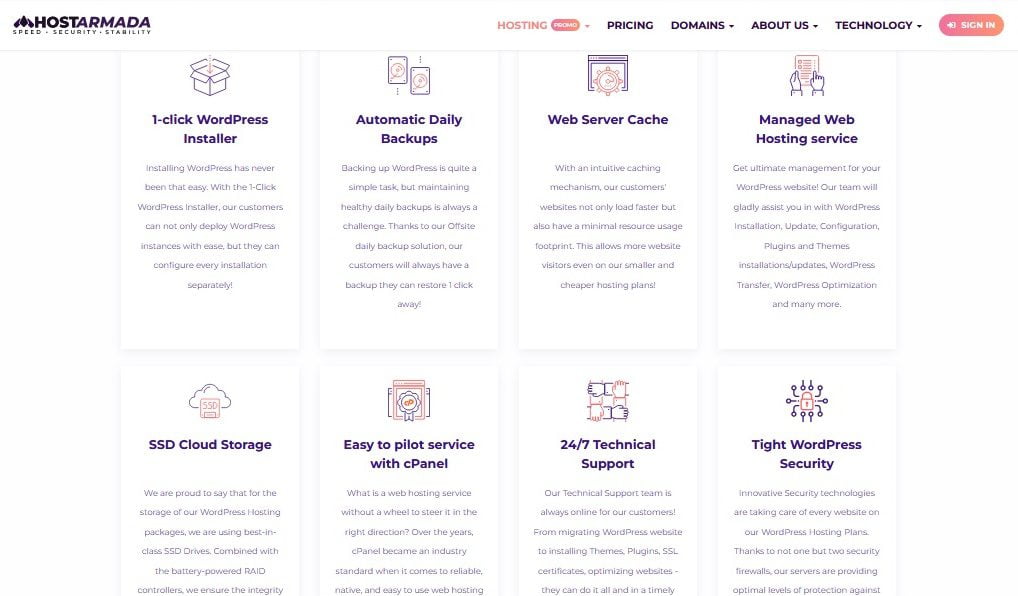
World-Class Security & Speed Performance Features of HostArmada.
HostArmada Security Features
- Proactive Defense
- SSL for all websites for free from Sectigo and cPanel Auto SSL with Free SNI (Server Name Indicator)
- Advanced Network Firewall with herd immunity
- Free daily backups as a complimentary service
- Dos/DDoS Protection
- Brute-Force Protection
- Hotlink Protection
- HostArmada’s Web Server Security Fleet secures web servers from surveilling the web traffic to every shared web hosting server to identifying and blocking incoming cyber attacks
- Requests Checking Service
- Next-gen IDS / IPS
- Hardened PHP
- Web Application Firewall
- Static Files Checking
- Environment Security Fleet identifies and mitigates all security threats across servers. It also stops code-injected exploits and performs malware scans
- Live Security Events Monitoring
- Proactive Zero-day attack detection
- Exclusive Malware Scanning & Removals
- User Account Isolation: User account interactions are prevented on shared hosting plans
- Fast Patching: When security vulnerabilities are detected and reported, the company will patch them on the server level
- OS Patch Management Feature
- Directory Password Protection
- CageFS
- Client Area Two-Factor Authentication
- Live Server Monitoring
- Hacked Website Restore
- Email Virus Scanner.
- Outbound Email Filtering
Web Hosting Features
10. InterServer Web Hosting
It is one of the fastest-growing reliable web hosting companies in the world. The following are the security features of their hosting.
InterServer Security Features
- InterShield Security is an in-house developed security feature that protects your valuable servers from threats & attacks.
- Machine Learning Firewall
- In-House Malware Database
- Block web attacks
- Spam Filtering
- Automatic virus scanner
Website Hosting Features
11. Namecheap Hosting
Namecheap is a leading domain registrar and website hosting provider that offers a range of hosting solutions for businesses and individuals.
With its range of reliable hosting plans, affordable pricing and excellent customer service, Namecheap is an excellent choice for anyone who is looking to start an online business.
Namecheap offers a wide range of security features to ensure the safety and protection of websites hosted on their servers. Some of the hosting security features are given below:
Namecheap Security Features
- SSL Certificates: Secure Socket Layer Certificates are very important for securing websites and protecting sensitive information such as usernames, passwords, and credit card information.
- Namecheap offers free SSL certificates with all its hosting plans to make sure that your website is encrypted and secure.
- Domain Privacy Protection: This feature helps keep your personal information safe and secure by masking your personal information in the WHOIS database.
- This prevents spammers, hackers, and other malicious actors from accessing your personal information.
- Two-Factor Authentication: Namecheap hosting offers two-factor authentication (2FA) as an extra layer of security for its customers.
- With 2FA, users are required to enter a unique code sent to their mobile device or email before accessing their hosting account to make sure that only authorized users access the account.
- Anti-Malware Protection: The company has an anti-malware protection service to protect your website from malware, viruses, and other malicious attacks. It also periodically scans your hosting account to make it safe and secure.
- In addition to these security features, Namecheap also has some premium security services such as spam protection, firewalls, and DDoS protection.
- Overall, Namecheap’s hosting security features make it an excellent choice for businesses and individuals who prioritize website security and protection.
Automatic Backups: This hosting provider takes automatic backups regularly which helps you retrieve your website in case of data loss. This is essential for ensuring that your website is safe and secure in the event of a data breach or other security incident.
Namecheap is one of the most secured web hosting service provider in the world.
12. Kinsta – Secure Premium Web Hosting
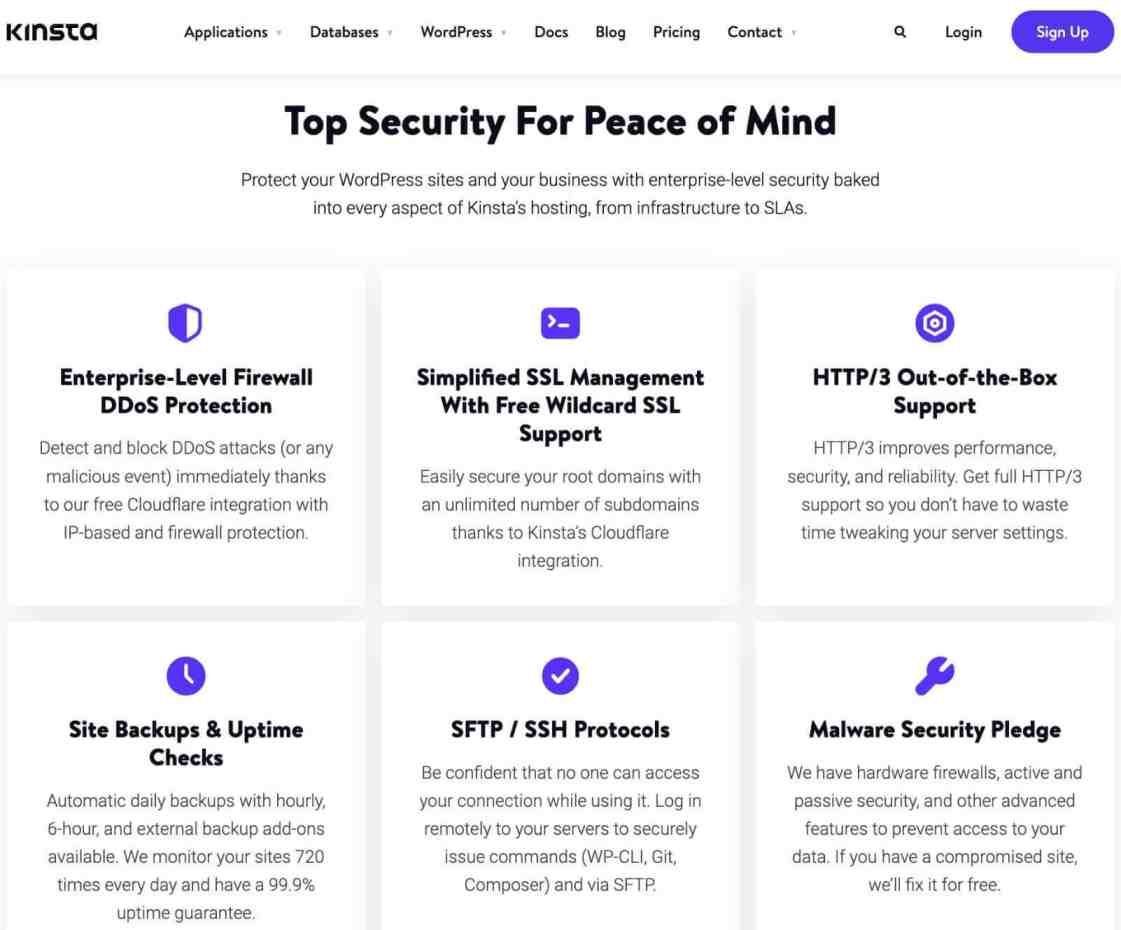
Kinsta is a cloud hosting platform that provides premium Application Hosting, Database Hosting, and Managed WordPress Hosting for web projects of all sizes.
They support over 100,000+ sites from major corporations, nonprofits, agencies, and small businesses, and they continuously help entrepreneurs to bring their projects to life.
When it comes to the security of websites, Kinsta’s hosting is one of the most secure platforms out there, as it excels with its solid infrastructure and premium features to keep any malicious threats at bay.
Kinsta’s safe hosting platform is well designed with top priority on both security and performance. Below are some of Kinsta’s hosting premium security features:
Kinsta Security Features
- If you are on a Starter plan or Enterprise plan, your website will be equally highly protected through the same active and passive security measures.
- Proactive and reactive security actions are standard practice for all web projects hosted on Kinsta.
- 2-layered firewall protection powered by Google Cloud Platform’s IP-based protection firewall and Cloudflare’s enterprise-level firewall to prevent DDOS attacks and any other malicious attacks from ever reaching your site.
- Each site on Kinsta runs on its 100% private, isolated Linux software container, and it comes with all private software resources required to run a site (Linux, NGINX, PHP, and MySQL).
- Every site hosted with Kinsta gets Malware Security Pledge.
- Auto-healing technology through automatic database optimization and self-healing PHP technology to optimize and stabilize any WordPress site hosted on Kinsta’s platform.
- Fully encrypted SFTP and SSH connections and free Letsencrypt SSL certificates to enable HTTPS and make sure all customer data remains safe and encrypted. HTTP/2 and A+ ratings on Qualys SSL Labs are standard across all hosting plans.
- Two-factor authentication, GeoIP blocking, and auto-ban on multiple login attempts are other extra security steps that Kinsta has set as a standard for all web projects hosted on their platform.
- Premium Anycast DNS service powered by Amazon Route53 is included in all plans. Kinsta’s DNS supports latency and geolocation-based routing to ensure quick response times.
- Kinsta comes with a custom-built dashboard (MyKinsta) that allows site owners to define user permissions accurately. You can set as many user roles as you’d like since there is no limit to user role permissions.
- To increase the protection against security vulnerabilities and improve speed, the Kinsta Cloud Platform only supports the latest PHP versions (PHP 8.0+).
- Kinsta’s security has active and passive measures, WordPress-specific security rules, WAF and SSL support, plugin vulnerability scans, continuous monitoring, malware removal, WP-CLI, SSH, Git, and ionCube loader.
- Kinsta has 24/7 malware removal service and assistance and a hack-fix guarantee which comes at no extra cost.
- If, by any chance, your site is compromised, Kinsta will fix it with immediate priority.
For Application and Database Hosting, Kinsta currently offers a free trial.
Web Hosting Features
13. WP Engine – The Engine That Powers Your Website
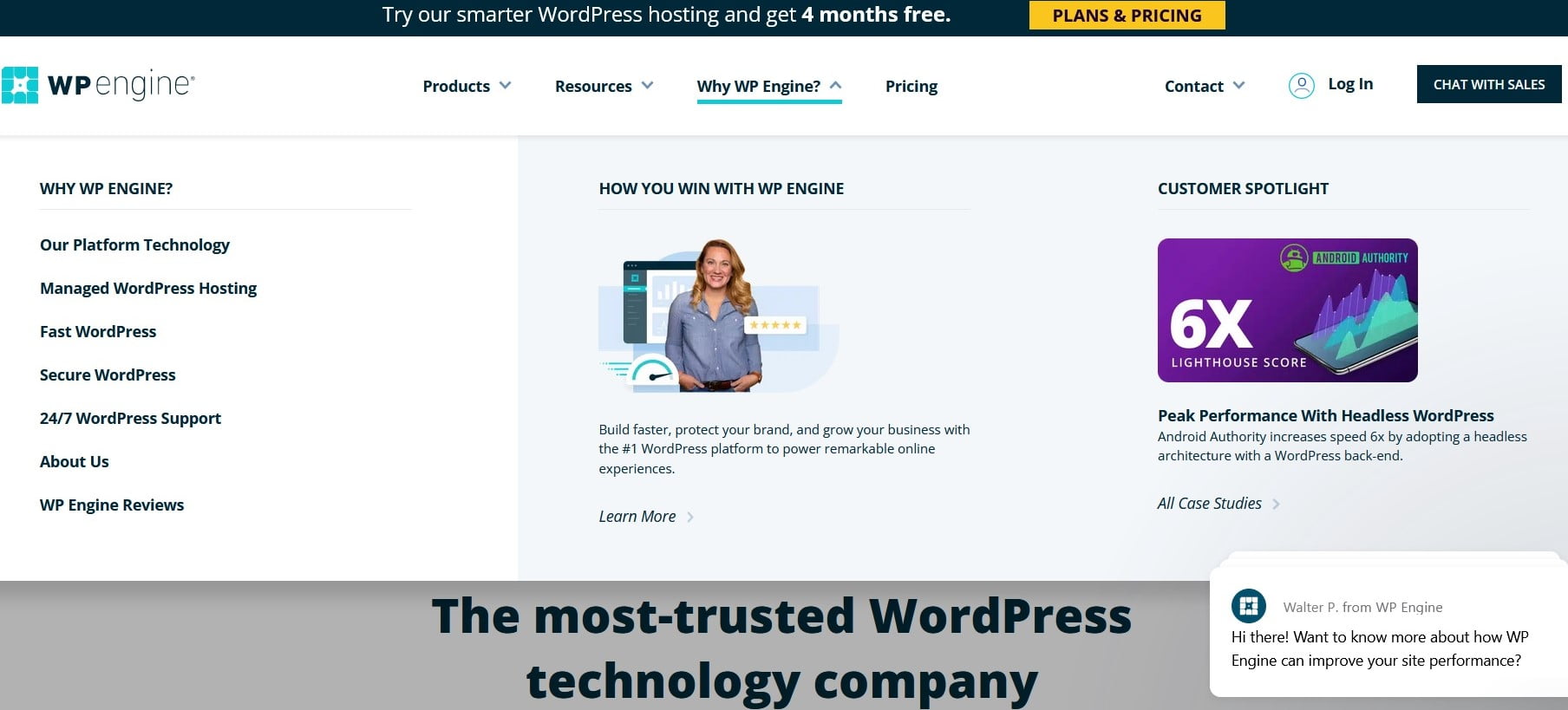
WP Engine Web Hosting is one of the most secure website hosting providers with unique and innovative features.
WP Engine Security Features
- The hosting provider is compliant with SOC-2 standards for Security and Availability of Trust Services Categories.
- Automatic updates and vulnerability scanning to secure websites from security breaches and hacking.
- This hosting provider forces website owners to create strong passwords for Administrator, Author, and Editor user roles.
- Platform-level protection to detect threats & block attacks
- WP Engine limits the disk write privileges to authorized users only to prevent the site themes or plugins from creating any malicious codes.
- Automatic WordPress & PHP updates.
- They also create and manage separate database users for each of your websites hosted on WP Engine so that if one website is hacked or compromised other websites will be safe and secure.
- Multi-factor password authentication.
- Advanced DDOS Mitigation.
- It configures file protection by securing upload folders from unauthorized changes.
- It has developed a system that identifies spam bots & bad actors and blocks them immediately so that they don’t use your server resources for form entries, or send spam emails and comments.
- Activity logs & user permissions.
- WP Engine automatically blocks the XMLRPC attacks which send fake requests for targeted attacks.
- This hosting provider prevents brute force attacks on the login page and returns an empty response.
- You will get Let’s Encrypt SSL Certificates for your websites for the encryption of user data.
- WordPress-optimized WAF.
- Secure file transfer protocols are enforced on users to use SFTP for the encryption of file transfers.
- Encrypted backups are done for your files and stored in an isolated environment so that your backup data is safe and secure and can be restored with the click of a button.
- Global Edge Security (GES) is a security and performance add-on feature developed in partnership with Cloudflare.
- You can use the Security and Site Performance Test tool to test your website.
Web Hosting Features
The Ultimate Web Hosting Security Checklist
This checklist distills everything we’ve discussed into actionable items for you and your host. Use it to evaluate your current setup or to vet a potential new host.
Server-Level Security (Your Host’s Responsibility)
Web Application Firewall (WAF)
Does your host actively filter malicious traffic before it reaches your site?
Look for a WAF that blocks common hacking attempts like SQL injection (where attackers try to run malicious database queries) and cross-site scripting (where they try to inject malicious code into your pages).
The best hosts use AI-powered WAFs that can adapt to new threats without waiting for manual updates.
DDoS Protection
Can your host absorb a distributed denial-of-service attack designed to overwhelm your server with fake traffic and take your site offline?
Protection should exist at both the network level (for large volumetric attacks) and the application level (for more sophisticated attacks that mimic real visitors). Ask if they use technologies like Cloudflare to filter malicious traffic at the edge.
Account Isolation
On shared hosting, what prevents a hacked website on the same server from spreading to yours? Look for technologies like CageFS (used by Verpex, HostArmada, and FastComet) or full containerization (used by Kinsta).
These create virtual barriers between accounts so that even if one site is compromised, others remain safe.
Malware Scanning
Does your host proactively scan for malware, or do they only react after you report a problem? The best hosts use AI-driven scanning that can detect zero-day threats (brand-new malware that hasn’t been seen before) by analyzing behavior, not just looking for known signatures.
Automated, Off-Server Backups
Are daily backups performed automatically? Are they stored in a separate location from your live server (so a hack can’t wipe out your backups too)?
Can you easily restore a backup with one click? And crucially, can you test your backups in a staging environment to ensure they actually work?
Free SSL Certificates with Auto-Renewal
SSL/TLS certificates encrypt data between your server and your visitors. They should be free (via Let’s Encrypt or similar), automatically renewed so they never expire, and support the latest TLS 1.3 protocol for maximum security and speed.
Patch Management
When a critical vulnerability is discovered in server software (like the Linux kernel), how quickly does your host apply the patch?
Do they require a server reboot that causes downtime, or do they use technologies like KernelCare (used by A2 Hosting) that apply patches instantly with zero downtime?
24/7 Security Monitoring
Is the host’s network monitored around the clock for suspicious activity? If an attack is detected at 3 AM, is there someone awake and ready to respond?
Your Part in Web Hosting Security: Actions You Take
Your host provides the fortified castle, but you have to lock the doors and windows. These are the non-negotiable actions that fall entirely on you.
Enable Passkeys or Multi-Factor Authentication
Passwords are the weakest link in security. If your host supports passkeys (like Hostinger does), enable them. This lets you log in using your fingerprint, face recognition, or a hardware security key so there’s no password to steal or phish.
If passkeys aren’t available, enable MFA (also called 2FA) on your hosting account, your email, and your CMS admin panel (like WordPress). This means even if someone steals your password, they can’t log in without the second factor (usually a code from your phone).
Adopt a “Least Privilege” Approach
Only give users the access they absolutely need to do their jobs. A content writer does not need administrative access to the server. A social media manager doesn’t need access to your hosting billing information.
Review your user accounts every month and revoke access for anyone who no longer needs it. This limits the damage if an account is compromised.
Use a Password Manager
Stop reusing passwords. If you use the same password on multiple sites and one of them gets hacked, attackers will try that same password on your email, hosting, and banking sites.
A password manager (like 1Password, Bitwarden, or LastPass) generates and stores strong, unique passwords for every service. You only need to remember one master password.
Always Use SFTP, Never FTP
File Transfer Protocol (FTP) sends your username and password in plain text across the internet. Anyone monitoring your network can steal them.
SFTP (SSH File Transfer Protocol) encrypts your entire connection, protecting your login credentials and your files during transfer. Most hosts provide SFTP access by default, use it.
Keep Everything Updated
This is the single most important and most neglected task. Hackers constantly scan for websites running outdated software with known vulnerabilities. Update your CMS core (WordPress, Joomla, etc.), all plugins, and all themes the moment security patches are released.
Enable automatic updates wherever possible. If a plugin or theme hasn’t been updated in over a year, consider replacing it.
Remove Unused Plugins and Themes
Every piece of unused software sitting on your server is a potential backdoor. If you’re not using a plugin or theme, delete it entirely but don’t just deactivate it. Old, abandoned plugins are a favorite target for attackers because they often have known vulnerabilities that never get patched.
Test Your Backups Regularly
Here’s a hard truth: A backup you can’t restore is worthless. Don’t wait for a disaster to find out your backups are corrupt. Schedule a quarterly test restore to a staging environment. Confirm that your files are intact, your database is safe, and your site functions correctly.
Know exactly how long the restore process takes so you can set accurate expectations if the worst happens.
Monitor Your Logs
You don’t need to be a security expert, but spending five minutes a week reviewing your site’s access and error logs can reveal early warning signs. A sudden spike in 404 errors could mean someone is scanning for vulnerable files.
A flood of failed login attempts from unfamiliar IP addresses could mean a brute-force attack is underway. Most hosting control panels provide easy access to these logs.
Use Strong Passwords for Databases and Email
Your hosting account password is critical, but so are your database passwords and email account passwords. Use your password manager to generate strong, unique passwords for every single credential associated with your site.
Website Hardening (Proactive Measures)
These are advanced steps that go beyond basic maintenance. They actively make your site harder to compromise.
Implement a Content Security Policy (CSP)
This is a browser security feature that helps prevent cross-site scripting (XSS) attacks. You add a special HTTP header that tells the browser exactly which sources it’s allowed to load resources from (scripts, stylesheets, images).
If an attacker tries to inject malicious script from an unauthorized source, the browser blocks it. It takes some technical knowledge to set up correctly, but it’s one of the most powerful protections available.
Limit Login Attempts
By default, most CMS platforms allow unlimited login attempts. Attackers exploit this by using bots to try thousands of passwords per minute.
Use a plugin (like Wordfence or Limit Login Attempts Reloaded for WordPress) or your host’s built-in tools to block IP addresses after a certain number of failed attempts, typically 3 to 5.
Disable File Editing in the Dashboard
In WordPress, if an attacker gains admin access, they can edit your theme and plugin files directly from the dashboard and inject malicious code. Add this line to your wp-config.php file to disable that capability entirely:
define('DISALLOW_FILE_EDIT', true)
This forces any file changes to go through SFTP, which requires your hosting credentials and adds an extra layer of security.
Change Default Admin Usernames
If your admin username is “admin,” change it immediately. That’s the first username attackers try in brute-force attacks. Create a unique, non-obvious username instead.
If your site was set up with “admin” as the default, create a new admin user with a different name, then delete the old “admin” account.
Regularly Audit Your Installed Plugins and Themes
Set a calendar reminder every three months to review everything installed on your site. Ask yourself: Are we actively using this? Is it still supported by the developer? Has it been updated recently? If the answer to any of these questions is no, deactivate and delete it.
Hide Your Login Page
Many attackers target the default login URLs (like /wp-admin or /wp-login.php for WordPress).
Plugins like WPS Hide Login allow you to change your login URL to something custom (like /your-secret-login). This immediately stops 99% of automated brute-force attacks because the bots can’t find your login page.
Enable Automatic Logouts
For sites with multiple users, configure your CMS to automatically log users out after a period of inactivity (like 30 minutes). This prevents someone from walking away from a logged-in computer and leaving your site exposed.
Disable Directory Browsing
By default, if someone visits a directory on your site that doesn’t have an index file (like yoursite.com/wp-content/uploads/), they might see a list of all files in that directory.
This can expose sensitive information. Your host should have directory browsing disabled by default, but it’s worth confirming. For WordPress, you can add this line to your .htaccess file:
Options -Indexes
Shared Web Hosting: Advantages and Disadvantages
Shared hosting is the entry point for most website owners. It’s affordable, easy to use, and requires no technical expertise.
But it’s also the most misunderstood hosting type, especially when it comes to security. Let’s break down the real advantages and disadvantages so you can make an informed decision.
Advantages
Lower Cost Than Dedicated or VPS Servers
This is the most obvious advantage. Because you’re sharing server resources with dozens or hundreds of other websites, the cost per user is dramatically lower.
You can get started with a reputable, secure host like Hostinger for as little as $2.49/month. For personal websites, blogs, and small businesses just starting out, this low barrier to entry is invaluable.
Multiple Websites Share One Server, Reducing Complexity
In a shared hosting environment, the hosting provider handles all server management tasks: security updates, software patches, firewall configuration, and hardware maintenance. You don’t need to know how to secure a Linux server or configure Apache.
You simply log in to your control panel (usually cPanel), install WordPress with one click, and start building. This simplicity is a major advantage for non-technical users.
Ideal for Small Businesses and Personal Websites
If you’re a small business with a brochure website, a local restaurant, a freelance portfolio, or a personal blog, you likely don’t need the power of a dedicated server. Your traffic is manageable, and your resource needs are modest.
Shared hosting provides everything you need at a price that makes sense. Many of the hosts on our list, like SiteGround and DreamHost, have built their reputations on providing excellent shared hosting experiences.
Greater Resource Flexibility Than You Might Think
Modern shared hosting, especially on platforms using CloudLinux, offers surprising resource flexibility. Technologies like LVE (Lightweight Virtual Environment) allocate specific resources to each account, ensuring that one site can’t monopolize the server.
This means your site’s performance is more predictable than in the old days of shared hosting.
Wider Range of Available Services
Shared hosting plans often include a bundle of services that would be costly to configure on a VPS or dedicated server. This includes:
- One-click installers for popular applications (WordPress, Joomla, Drupal).
- Free website builders.
- Free SSL certificates.
- Automated backups.
- Email hosting with spam filtering.
- Databases (like MySQL) already configured and optimized.
Disadvantages
Disadvantages of Shared Web Hosting
Limited Bandwidth and Storage Space
While shared hosting plans often advertise “unlimited” bandwidth or storage, there are always fair usage policies. If your site grows significantly and starts consuming excessive resources, the host may ask you to upgrade to a VPS or dedicated plan.
For most small sites, this is a non-issue, but it’s something to be aware of as you scale.
Potential for Server Overload and Security Issues
This is the most significant disadvantage. Because you’re sharing a server with other websites, you are vulnerable to their actions. If a neighboring site is poorly coded, it could consume excessive resources and slow down your site.
If a neighboring site is hacked, a poorly configured server could allow that attacker to “jump” to your account (cross-site contamination).
Solution: This is why choosing a host with account isolation technology (like CloudLinux with CageFS) is so critical.
All of our top-ranked shared hosts use this technology to prevent cross-site contamination. It’s not a reason to avoid shared hosting; it’s a reason to choose your host carefully.
Configuration and Management Limitations
On shared hosting, you have limited control over server-level settings. You cannot install custom server software, change core PHP settings beyond what’s offered in cPanel, or configure the web server itself.
For most users, this is fine. But for developers who need granular control, a VPS or dedicated server is necessary.
Shared IP Address Reputation
Your site shares an IP address with other sites on the server. If one of those sites engages in spam, phishing, or other malicious activity, the shared IP could get blacklisted.
This could affect your email deliverability (if you send email from that server) and, in some cases, your search engine rankings.
Solution: Ensure your host actively monitors outbound email for spam and has clear policies to deal with offenders. For mission-critical sites, consider a plan that offers a dedicated IP address.
Security Settings May Not Be Customizable
You are relying on your host to configure security correctly. If they make a mistake, you’re exposed. This is why due diligence is essential. Stick with reputable hosts from our list that have a proven track record of security.
Why Prefer VPS or Dedicated Hosting Over Shared Hosting?
For many website owners, shared hosting is the perfect starting point. But as websites grow and requirements become more complex, the limitations of shared hosting become apparent.
Here’s why some people choose to upgrade to VPS (Virtual Private Server) or dedicated hosting.
VPS/Dedicated Hosting Offers More Resources
In shared hosting, you’re sharing CPU, RAM, and I/O with other users. In VPS hosting, you have a guaranteed allocation of resources. In dedicated hosting, you have the entire server to yourself. This means:
- Consistent Performance: No “noisy neighbor” can steal your resources.
- Higher Traffic Capacity: You can handle much larger traffic spikes without slowdowns.
- Faster Load Times: Dedicated resources often translate to faster page loads.
Higher Speed and Reliability
With dedicated resources, your site’s speed is more consistent. You’re not competing with other sites for disk I/O or processing power. This is especially important for e-commerce sites where every millisecond of delay can impact conversion rates.
More Bandwidth and Storage Provisioned
VPS and dedicated plans typically come with significantly more generous bandwidth allocations and storage space. They also often use faster storage technologies, like NVMe SSDs, which are standard on hosts like A2 Hosting’s Turbo plans.
The Whole Server is Yours (in Dedicated Hosting)
With a dedicated server, you have absolute control. You can configure the server exactly as you need, install any software, and optimize every setting for your specific application. This level of control is essential for large organizations with unique requirements.
Highest Availability and Reliability
Dedicated servers, especially those from providers like Atlantic.Net with enterprise-grade infrastructure and SSAE-18 audited data centers, offer the highest levels of availability and reliability. They are designed for mission-critical applications where downtime is not an option.
Most Control Over Resources
With VPS and dedicated hosting, you are the administrator. You can:
- Install custom software.
- Configure security settings at a granular level.
- Reboot the server when needed.
- Choose your operating system.
- Implement custom firewall rules.
This control comes at a cost of both financial and in terms of expertise. VPS and dedicated hosting require more technical knowledge to manage securely. If you don’t have that expertise in-house, you’ll need a managed solution (like Cloudways or Kinsta) or be prepared to learn.
Shared vs. VPS/Dedicated: Which Should You Choose?
| Factor | Shared Hosting | VPS Hosting | Dedicated Hosting |
|---|---|---|---|
| Cost | Low ($2-$10/month) | Moderate ($20-$100/month) | High ($100+/month) |
| Technical Skill Required | None | Moderate to High | High |
| Resource Guarantee | No (shared) | Yes (allocated) | Yes (total) |
| Control | Limited | Significant | Total |
| Security Responsibility | Mostly host | Shared (host + you) | Mostly you (unless managed) |
| Best For | Beginners, blogs, small biz | Growing sites, developers | Large enterprises, high traffic |
Conclusion
In conclusion, prioritizing security in your hosting provider selection process involves a multifaceted approach.
Begin by scrutinizing their infrastructure, ensuring robust features like SSL certificates, firewalls, and regular security updates. dig into their track record – read reviews and seek testimonials to gauge their commitment to thwarting cyber risks.
Remember that security is a continuous process, and it’s crucial to stay vigilant and proactive in maintaining the security of your hosted website.
Frequently Asked Questions
What is the Safest Web Hosting?
A website hosting company like Hostinger offers security-focused web hosting services to defend websites & web visitors safe from malware and other kinds of cyber attacks, counting security from DDoS, zero-day, man-in-the-middle, SQL injection, & DNS tunneling.
A secure web host will also offer an SSL certificate that makes sure that all sensitive information such as fiscal details is protected by encrypting all data traffic between the customer & the website.
What is the Most Secure Server?
Secure servers are those servers that utilize the secure sockets layer protocol to guard communication from unintentional recipients.
More usually referred to as SSL servers, protected servers will communicate between other Web servers and web browsers by cryptography, or encrypted and decrypted communication.
Generally speaking, most Web servers can use a number of levels of security; a common instance is a login/password needed for password-protected pages.
Though possibly effective in preventing illicit access, password-protection security measures are nothing more than a list of satisfactory users created by the domain owner & stored on his server.
How do I Choose a Secure Web Hosting?
Everyone knows that websites are very important for the success of every digital business in a technology-driven world. Furthermore, it is also the most efficient way to communicate and be heard when it comes to sharing ideas or even leisure.
That’s why it becomes very important to choose a secure website hosting, then we tell you that here we have talked about some such features and services above that should be included in a web host provider.
You just have to keep in mind that all these features and services should be present in any company you are choosing.
If you want to make this task easier, then choose a web hosting service provider like Hostinger for securing your website.
What is Secure Web Hosting?
As we have already told there are many differences between secure web hosting and normal web hosting, such as in secure web hosting you get many security-related features such as SSL Availability and Support, Virus Scanner, SSL Certificate, DDoS Attack Mitigation, etc.
At present, all these features and services are being provided by Hostinger at a very low cost; you can easily host your website with Hostinger without any security issues.
Which is the Best Website For Hosting?
Now if we talk about the most secure and best web hosting company or website, then you can choose Dream Host because it is a popular web hosting company that has been providing reliable services to its customers for many years.
Is Hosting Your Own Website Secure?
These days, it’s simple for entrepreneurs, bloggers, & other self-starters to get started with their personal websites. With a website builder, you can arrange a web design based on a pattern, even if you have no prior web design knowledge.
And thanks to built-in hosting services or external hosting providers, you can ensure your website is quick enough, with ample uptime, for the least monthly fee.
But when it comes to hosting your own website is the secure option then we must tell you that it’s not a wise choice because, from the point of view of security, you are unaware of the cyber attacks of today and every day a new way of attacking is being found here.
On the other hand, if you get your website hosted by a well-known hosting company, then it gives you a complete security guarantee because they have an experienced team that helps keep your website safe from all kinds of cyber threats.
Also, if you want to host your website yourself, then you can get help from a company like Hostinger.
Why is Web Hosting So Expensive?
Web hosting can be expensive due to many factors such as the cost of server hardware & infrastructure, maintenance, security measures and technical support.
Additionally, hosting providers invest in reliable network connections, backup systems, and advanced technologies to ensure optimal performance, security and uptime for websites. These investments contribute to the overall cost of web hosting services.
However, it’s worth noting that Hostinger is offering hosting at different price plans, allowing users to choose plans that align with their specific needs and budget.